How breeding genetics works
Every creature in Lumihatch carries two genes for each part of its body, one from its mother and one from its father. Which one shows, which one hides and what the young can inherit follows the same rules as a Punnett square at school. Once you know them, very little a clutch does will surprise you.
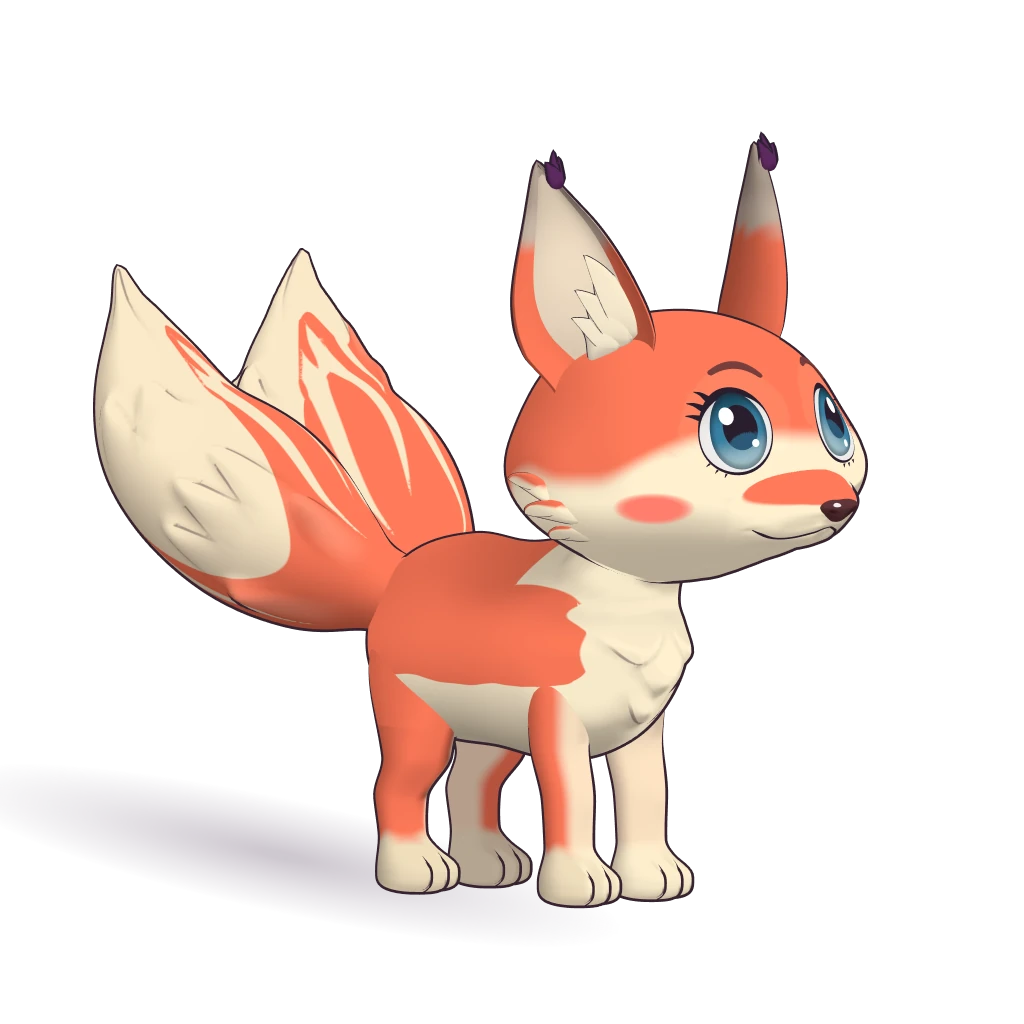
Two genes for every body part
A creature’s ears, head, back, tail, coat, eyes and other body parts each have their own pair of genes. A gene is either the species’ natural look or a trait, such as Tufted Ears or Twin Tails on a Fennic.
When two creatures pair, the egg gets one of the mother’s two genes and one of the father’s two, each picked by chance. That is all inheritance is: one from each parent, for every body part, each part on its own.
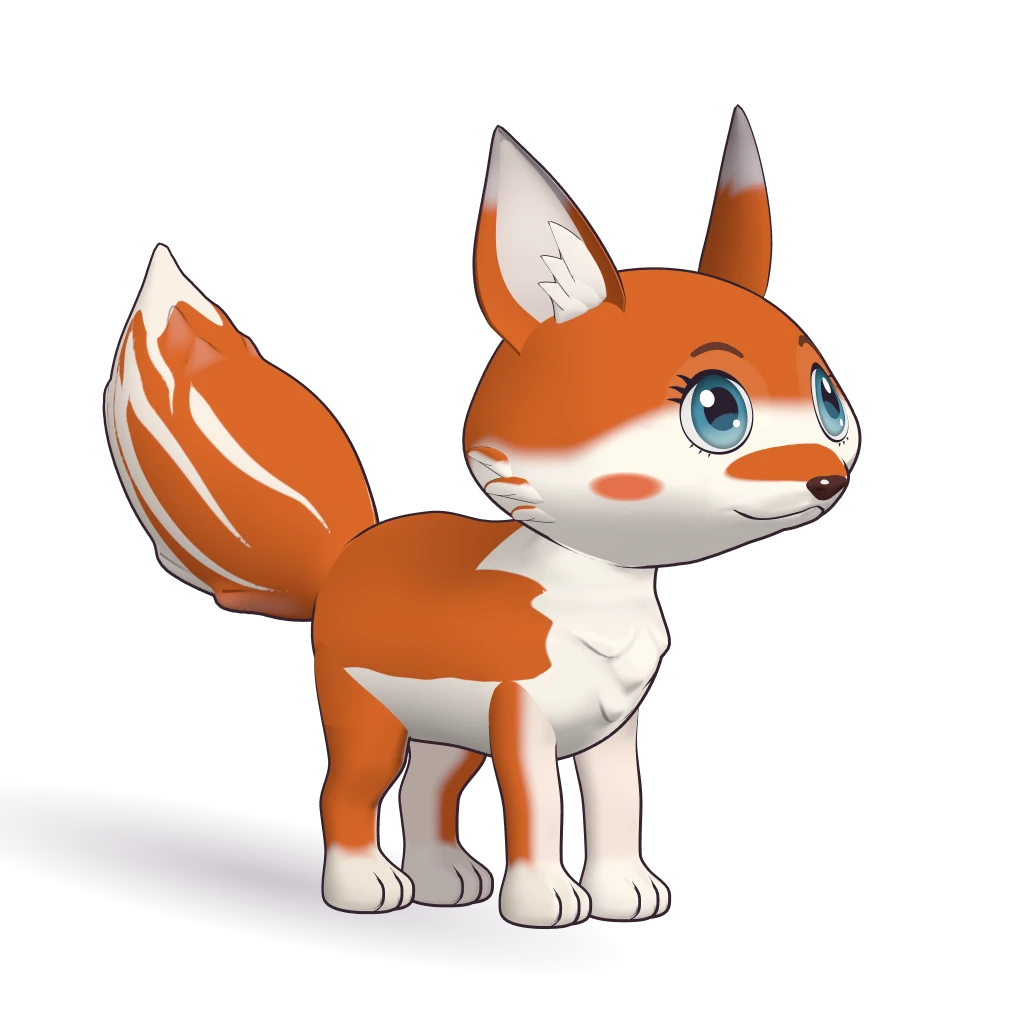
Why a trait can hide
The natural look always wins over a trait. A Fennic with one gene for Tufted Ears and one natural gene has plain pointed ears: it carries the trait without showing it. Only a creature with the trait’s gene twice shows it.
That is why two plain-looking parents can have young with a trait neither of them shows, and why a trait can disappear for generations and then return.
If a creature carries two different traits for the same body part, the stronger of the two shows and the other is carried. If they are equally strong, chance decides once, when the egg is laid.
The odds, pair by pair
There are only a few cases to remember, and they hold for every trait.
- Both parents show the trait: every egg shows it.
- One parent shows it and the other carries it hidden: half the eggs show it, the other half carry it.
- Both parents carry it hidden: one egg in four shows it, two in four carry it and one in four doesn’t have it.
- One parent shows it and the other doesn’t have it: no egg shows it, but every egg carries it.
The pairing preview does this arithmetic for you. Before you commit to a pair it shows the exact chance of every trait showing, and of every trait being carried unseen.
| Father’s genes | ||
|---|---|---|
| Mother’s genes | Natural | Trait |
| Natural | Doesn’t have it | Carries it hidden |
| Trait | Carries it hidden | Shows the trait |
Hidden genes and the scan
What a creature shows, you can see. What it carries, you can’t, unless you know its parents or scan it. A gene scan reveals a creature’s hidden genes, and the pairing preview then counts them in. Until then the preview marks those odds as unknown: possibilities, never a promise.
Wild eggs are worth scanning. They never show traits, but about 6 in a hundred carry one in secret.
Breeding a trait true
New traits come from the Lab. You study a trait, then infuse it into an egg in the Nest. Infusing replaces both of the egg’s genes for that body part, so the hatchling shows the trait and has its gene twice.
A creature with the gene twice can only pass that gene on. Pair two of them and every egg shows the trait: the line breeds true. Pair one with a natural creature and the trait goes into hiding in the next generation, ready to come back when two carriers meet.
Because each body part is inherited on its own, traits stack. One creature can show a trait in every place at once, and the craft of breeding is getting them all into the same egg.
Family matters
Two creatures that share a parent, a grandparent or a great-grandparent can’t be paired: the game checks 3 generations back. A project therefore needs more than one family. Start with two unrelated pairs, or bring in a wild egg or a creature from the Market when a line needs new blood.
Questions and answers
Can two natural-looking parents have young with a trait?
Yes, if both carry the same trait hidden. Each egg then has a one in four chance of showing it.
What does it mean that a trait breeds true?
That both parents have the trait’s gene twice, so every egg gets it from both sides and shows it. A creature hatched from an infused egg always has the gene twice.
How do I find out what my creature carries?
Scan it. A gene scan shows its hidden genes, and from then on the pairing preview counts them in its odds.
Are colours inherited the same way?
No. Traits follow the two-gene rule; colours and body shape blend between the parents instead. The guide to colour breeding explains how.